Beyond Human: Shifting Our Perspective Can Save the Planet
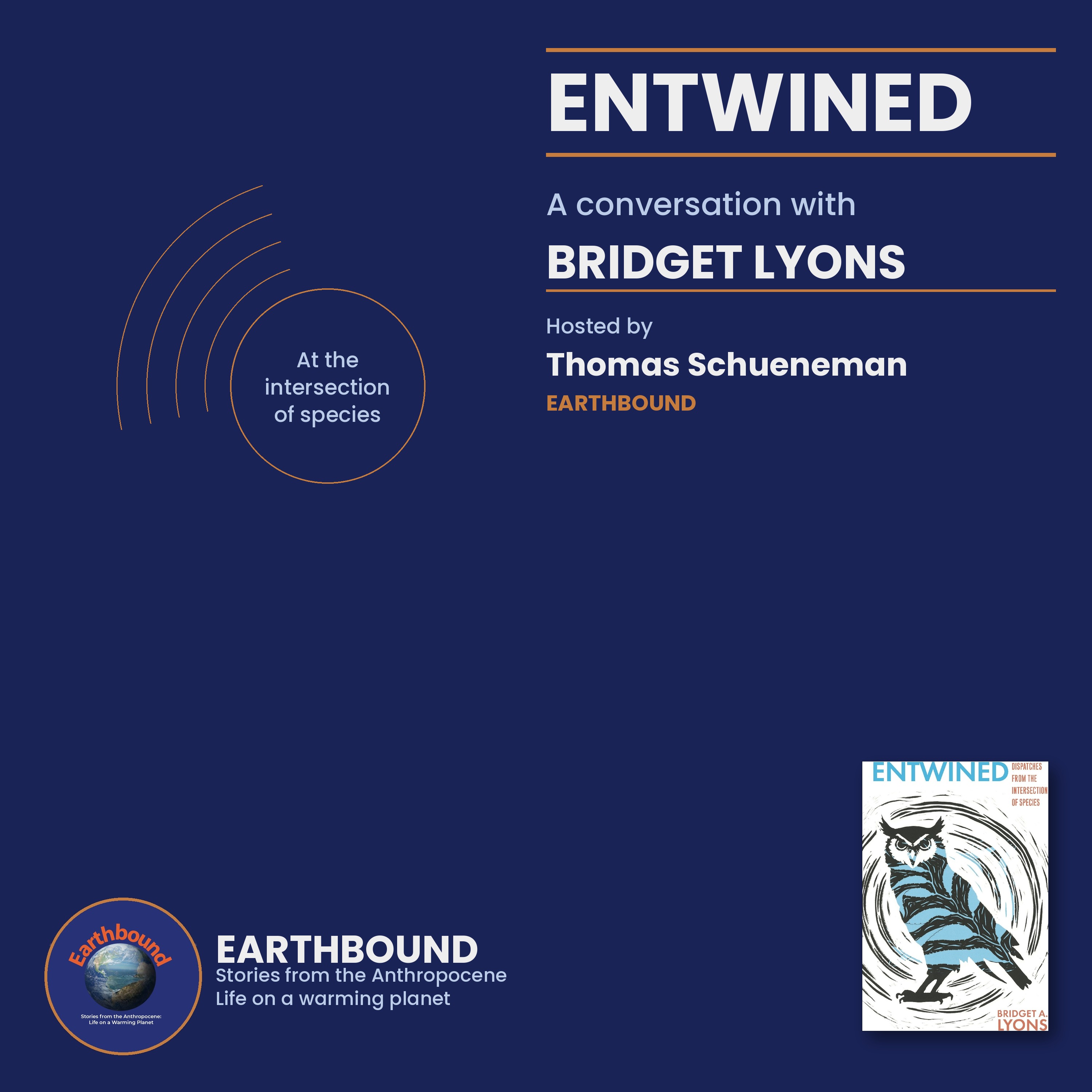
Welcome back to the podcast and our accompanying blog! In this week's episode, we dove deep into a conversation that, I believe, gets to the very heart of the climate crisis and the broader ecological emergencies we face. It’s not just about carbon emissions or habitat destruction, although those are undeniably critical. It’s about something more fundamental: our perspective. We had the immense pleasure of speaking with Bridget Lyons, a writer and wilderness guide whose work, particularly her book Entwined: Dispatches From the Intersection of Species, offers a profound re-evaluation of our place in the world. This blog post aims to unpack the core of her argument and explore the transformative power of moving beyond our inherently human-centric view. If you haven't yet listened to the episode, I highly encourage you to do so. You can find it right here: Bridget Lyons | Entwined: Dispatches From the Intersection of Species. Prepare to have your mind expanded.
Bridget Lyons' Core Argument: Our Human-Centric Lens
Bridget Lyons’s central thesis, which resonated so deeply with me and I hope with you, is that the climate crisis is, at its root, a crisis of perception. We are trapped in a deeply ingrained human-centric worldview, a lens that views the planet and its myriad inhabitants primarily through the filter of human needs, desires, and perceived superiority. This perspective, she argues, not only blinds us to the interconnectedness of life but actively drives our destructive behaviors. It’s the subtle, pervasive belief that we are separate from, and therefore entitled to exploit, the natural world. This isn't a new idea, but Lyons articulates it with such nuance and lived experience that it feels fresh and urgent. She challenges us to consider that our attempts to "manage" nature are born from this same flawed perception, often leading to unforeseen and detrimental consequences. The very language we use – "natural resources" – underscores this instrumental view, framing the earth as a storehouse for human use rather than a complex, sentient web of life in which we are but one thread.
The Historical Roots of Human Superiority
To truly grasp the depth of this human-centric lens, we must look at its historical and philosophical underpinnings. For centuries, Western thought has often placed humanity at the apex of a hierarchical ladder, in Aristotle’s “Great Chain of Being,” which extends from the simplest organisms to the divine, with humans occupying a privileged position just below the angels.
This narrative has been reinforced by religious interpretations, notably those derived from Genesis, which bestow dominion over the earth upon humankind. Philosophers like René Descartes, with his stark separation of mind and body (and by extension, human consciousness from the "mechanistic" world of animals), further solidified this sense of human exceptionalism. This intellectual scaffolding has provided a justification for treating the non-human world as mere raw material, an object to be studied, controlled, and ultimately, exploited for human advancement. The Enlightenment, while championing reason, often did so in a way that further distanced humans from their primal connection to nature, valuing abstract thought over embodied experience and intuitive understanding. This historical trajectory has created a cultural inertia, a default setting that is incredibly difficult to dislodge, but which Lyons argues is absolutely essential for our survival.
The Ecological Reality: We Are Entwined
In stark contrast to this hierarchical view, ecological science paints a picture of profound interconnectedness. Every organism, from the smallest bacterium to the largest whale, plays a role in the intricate tapestry of life. We are not separate from nature; we are an integral part of it. Lyons's encounters with owls that can hear heartbeats from afar, elk navigating the complexities of human intervention, and octopuses revealing astonishing intelligence, serve as potent reminders of the intelligence, agency, and intrinsic value of non-human beings. These aren't just biological specimens; they are co-inhabitants of this planet, with their own lives, relationships, and experiences. The concept of "entwinement" is central here. We are not merely observers or managers of a separate natural world; we are woven into its very fabric. Our well-being is inextricably linked to the health of ecosystems, the diversity of species, and the integrity of natural processes. When we damage one part of this web, the repercussions are felt throughout, often in ways we fail to anticipate. The polycrisis we face—climate change, biodiversity collapse, ecosystem fragmentation—is a testament to this fundamental truth. We have acted as if we can unilaterally alter Earth's systems without consequence, and the consequences are now undeniable.
From Domination to Kinship: Cultivating Empathy for the Non-Human
If our current predicament stems from a perception of separation and domination, the antidote must lie in fostering a sense of kinship and empathy for the non-human world. Lyons suggests that empathy is not just a passive feeling but an active practice, a muscle that needs to be exercised. This involves moving beyond our anthropocentric biases and attempting to understand the world from the perspective of other beings. It's about asking, "What is it like to be an owl? What is it like to be an octopus?" This isn't about fanciful projection, but about deep observation and a willingness to learn. Indigenous wisdom traditions, often marginalized by Western scientific and philosophical frameworks, offer a powerful counter-narrative. They have long understood and lived by the principles of interconnectedness and respect for all life. Re-engaging with these traditions, and actively cultivating our own capacity for empathy through mindful observation, is crucial. This means noticing the intricate life of an insect in the grass, the silent resilience of a plant pushing through concrete, or the complex social dynamics of a flock of birds. It's about recognizing the inherent worth and sentience of all living things, not just those that directly serve human interests.
The Limits of Control: Why Management Fails
A significant part of our human-centric approach manifests in our desire to "manage" nature. We create policies, implement conservation programs, and engage in large-scale interventions, often with the best intentions. However, as Lyons illustrates through examples like tamarisk invasions on Western rivers or chronic wasting disease threatening elk herds, these well-intentioned efforts can sometimes backfire. Ecosystems are incredibly complex and dynamic. Our attempts to simplify them, to impose order according to our limited understanding, often disrupt delicate balances and trigger cascading consequences that we never foresaw. The idea that we can "control" nature is an illusion born of our hubris. True ecological stewardship lies not in domination, but in humility, curiosity, and a willingness to work with natural processes rather than against them. It requires acknowledging the limits of our knowledge and the inherent wildness of the world. Instead of seeking to command, we should aim to co-exist and support the resilience of natural systems through minimal, carefully considered intervention, and a deep respect for emergent properties of complex ecosystems.
Small Acts of Attention: Reconnecting with the Web of Life
The path to healing our relationship with the planet doesn't necessarily require grand, sweeping gestures or technological fixes. Lyons finds immense hope in the power of small, consistent acts of attention. These are the moments when we consciously shift our focus from ourselves to the world around us. It could be as simple as putting down our phones and truly observing a spider spinning its web, or referring to a bird not as "it" but as "who." These micro-moments of engagement crack open our hardened shells of human-centered arrogance. They remind us that we are not isolated beings, but participants in a vast, vibrant, and interconnected web of life. This practice of observation cultivates wonder, curiosity, and a sense of belonging. It is through these small acts that we begin to dismantle the illusion of separation and rebuild our severed connection to the more-than-human world. The ripple effect of such individual shifts in perception can, over time, lead to profound collective change. When we start to see ourselves as part of a larger family of beings, our motivations and actions naturally begin to align with the well-being of the whole.
Hope Beyond Grand Solutions: The Revolutionary Power of Observation
It's easy to feel overwhelmed by the scale of the environmental challenges we face. We often look for a single, monumental solution that will magically fix everything. However, Lyons offers a more grounded and perhaps more powerful vision of hope. This hope doesn't lie in the realm of grand technological fixes or policy mandates alone, but in the quiet, revolutionary power of observation and empathy. It’s in the flicker of recognition when an audience member shares a personal encounter with an animal, or the simple act of referring to a spider as "who." These are the sparks that can ignite a fundamental shift in our worldview. By consciously choosing to engage with the non-human world, not as an outsider looking in, but as a fellow participant, we begin to weave ourselves back into the tapestry of life. This re-integration is not just about saving the planet; it's about reclaiming our own sense of belonging and purpose. It's about understanding that our own flourishing is intrinsically tied to the flourishing of all life. The revolutionary act of our time, Lyons suggests, may well be to simply pay attention.
Beyond Human for Planetary Survival
In this episode and in this blog post, we’ve explored Bridget Lyons’s compelling argument that our human-centric perspective is the fundamental root of our ecological crises. The historical narrative of human superiority, ingrained in our culture and philosophy, has led us to view the planet as a resource to be exploited rather than a complex, interconnected living system of which we are a part. Lyons masterfully guides us through the ecological reality of our entwinement with all species and the limitations of our attempts to "manage" nature. The transformative path forward, she suggests, lies in cultivating empathy for the non-human, recognizing their intrinsic value, and engaging in small acts of attention that reconnect us to the web of life. This shift from domination to kinship, from a desire to control to a practice of observation and wonder, is not merely an ethical choice; it is, as she so powerfully argues, essential for our survival and the healing of our planet. I encourage you, after listening to Bridget Lyons | Entwined: Dispatches From the Intersection of Species, to take these ideas into your own life. Start by observing. Start by questioning your own ingrained perceptions. Start by extending empathy beyond your own species. The future of our planet may well depend on it.
Resources and Further Exploration
To delve deeper into the topics discussed in this episode and blog post, I highly recommend exploring the following resources:
- Bridget Lyons's website: bridgetalyons.weebly.com
- Bridget Lyons' book: Entwined: Dispatches From the Intersection of Species - entwinedbook.weebly.com
- The work of Carl Safina: carlsafina.org
- The writing of Ed Yong: edyong.me
- Understanding the Great Chain of Being: greatchainofbeing.wordpress.com/2015/09/02/a-history-of-the-chain/
- Teton Raptor Center: tetonraptorcenter.org
- Facts about Velella Velella: pacificbeachcoalition.org/five-facts-about-velella-velella/
- Earthbound Podcast: earthboundpodcast.com
- Global Warming is Real: globalwarmingisreal.com